

 By
By
Jonathan Wynn and Teresa
Irene Gonzales
Perhaps
you’ve seen the award-winning film, Argo,
which tells the improbable-yet-true tale of a CIA officer, Antonio Mendez, who,
in 1979, pitches an incredible story to the Iranian government—that he is a
filmmaker wanting to scout a location to film a sci-fi movie in Iran—to successfully
smuggle six U.S. embassy workers out of the country. (You can read the full
story here.)
The
film received some criticism, however, since its release. On the one hand, the
film downplays the role of the Canadian government and the heroics of the
Canadian Ambassador to Iran, Ken Taylor. On the other, Ben Affleck has come
under fire
for choosing to portray Mendez. Although his surname is briefly mentioned in
the film, Mendez’s real-life ancestry and ethnicity is downplayed. As others have noted, while meticulous care
was taken to present “aesthetic accuracy” for most of the cast, this was not
the case between Affleck’s Tony and the real-life Mendez. This can be seen
during the final credit roll, where the audience is shown an image of the real
Tony Mendez shaking hands with President Jimmy Carter.
Recently,
when Affleck won a Golden Globe award for Best Director, he stood on stage with
Mendez and when he accepted his, stated: “Really this award is about Tony Mendez. You saw him. He's an
American hero. He represents the Foreign Service making sacrifices every day
for Americans. Our troops overseas. I want to thank them very much."
Representations
of ethnic groups are relatively important when thinking about popular media in
the United States. Mexican-Americans (and mixed ancestry
populations) are growing at large rates. According to the U.S. Census, the Latino population has more than
doubled in the last 20 years; of that 63% are of Mexican descent. They are now
the largest minority population in the country.
Yet our local media and popular culture industries continue to deny an
accurate representation of a complex Mexican-American narrative or character.
Sometimes
Latinas/os are not portrayed at all. Alison R. Hoffman and Chon A. Noriega’s
2004 article, “Looking for Latino Regulars on Prime Time Television” (available here), finds:
The appearance of Latino regular characters
on network prime-time television has steadily decreased over the last three
years. Latino regular characters appear in just one of the eight series set in
Los Angeles County, a region with a 45% Latino population. Latino regular
characters account for just 8% of the regular characters on the 16 series set
in New York City, a city with 27% Latino population. 50% of Latino regular
characters can be found on ABC programs.
If
they are represented, too often Latinas/os and Mexicans are viewed as what
sociologist Mia Tuan terms “forever foreign” in her study of the
Asian-American experience. This is the
idea that descendants of immigrants are not accepted with full American status.
When applied to descendants of immigrants from Latin American countries, we can
see this image perpetuated within broader American culture, and popular media
with films like Mi Familia and Real
Women Have Curves,
and television shows like Ugly Betty (which won Golden Globes for actress America
Ferrera and for Best Comedy Series).

Latinas/os
are often considered foreigners, but there are examples of whitewashing
Latina/o ethnicity too. For example, 1940s starlet Rita Hayworth—born Margarita
Carmen Cansino to a Spanish father and an Irish mother—was whitewashed to make
her more appealing to cinema audiences. (Further discussion of whitewashing in
American popular media can be found here.)
Do we
see a whitewashing of Mendez through the casting of Ben Affleck in Argo? The answer is trickier than we
might think. Mendez’s family migrated to the U.S. in the early 1900s, but on his mother’s
side, he is French and Irish.
Because
of the history of European conquest and the slave trade in Latin America, most
Latinas/os are multi-racial. As Gloria Anzaldúa reminds us, Latinos are by
definition mestiza, a mixture of races and cultures. The claims for whitewashing
are further
complicated by the fact that Mendez doesn’t identify himself as Hispanic. He does not speak
Spanish and considers himself as someone who grew up in the desert of the U.S.
Southwest.
Many
third and beyond generations of Latinos (similar to other ethnic groups) in the
U.S. do not speak Spanish
fluently,
and do not have a direct connection to a country of origin other than the
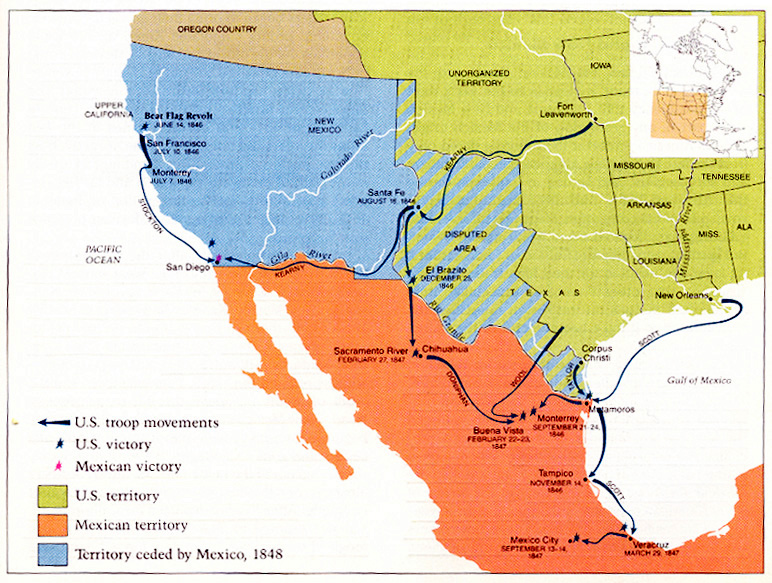
United States. Furthermore, due to the
U.S.-Mexican war, many Mexicans found themselves in the United States Southwest
(a place occupied by Native Indigenous groups, Mexicans, and White Americans)
without having moved. This complex, and very American narrative is
the precise reason why a Latino actor could have been cast or some discussion
of Mendez’s mixed ancestry could have been noted in the movie.
The
narrowing or erasing of the Mexican-American experience, and ignorance of the
long history of Mexicans in the United States——obfuscates the histories and
experiences of these populations, and assumes both a homogenous immigrant
narrative and a homogenous Latina/o look.
Argo could have expanded this understanding of the U.S. and this
Mexican-American history. This missed opportunity is particularly important, as
noted in Slate, because it is increasingly dangerous to be of Mexican
descent within the U.S. Deportations have increased during the Obama
administration , Mexican-American and Ethnic Studies have come under fire in
many states, brown bodies are profiled in Arizona, and, as Professor Otto Santa Ana notes, the network news constantly broadcasts negative racial
depictions of Latinas/os.
Who should care?
Well, minority representation in the media matters a great
deal in the real world. Seeing positive portraits of Latinas/os, or African
American men and women resonates with children and, when there are limited
options on television and in film, the stakes are much greater. One example we
can think of is Nichelle Nichols as the character Lt. Uhura on the original Star Trek television show. Nichols actually wanted to quit the show after
the first season, but Martin Luther King came to her and thanked her
for being a role model for the African American community. She stayed, and
groundbreaking NASA Astronaut Mae Jemison cites Uhura as her inspiration for
wanting to be an astronaut. (She even returned the favor and appeared in an
episode of Star Trek: The Next
Generation.)
How do the films and television programs that we see
today inform a generation of Latinas/os and African-Americans? Do we see the same erasure of
difference and complexity happen with representations of peoples from Native-American,
Asian-American, Arab-American, or Persian-American backgrounds? Who will be the next Mae Jemison?
Can not believe Argo is actually an acclaimed movie. What a bland production. It is average at best.
What a sad sad statement on the quality of our movies being produced.